
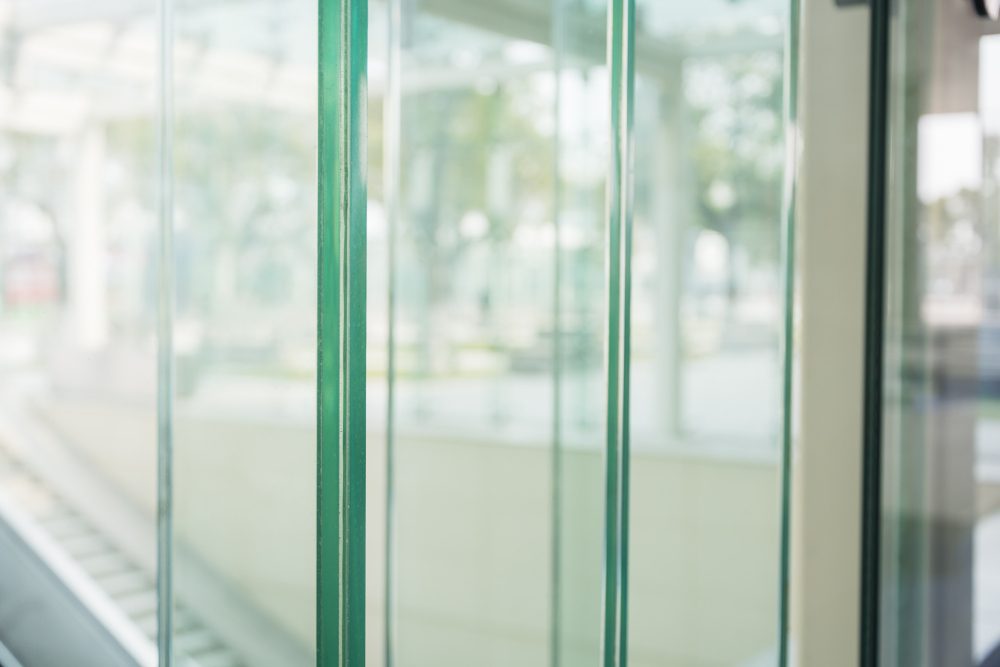
When a cricket ball hits a school window, when a storm drives debris into a hospital ward, when a child leans against a balcony railing, the glass that stands between risk and injury is almost always laminated glass. Unlike single-pane glazing that shatters into dangerous fragments, laminated glass stays together after breakage, keeping the barrier intact and preventing injury from falling shards.
This guide covers how laminated glass works, where it is essential, what Indian standards apply under NBC 2016, and how it fits alongside toughened glass and double glazed glass in schools, hospitals, residential, and commercial projects.
What Is Laminated Glass?
Laminated glass is safety glass made by bonding two or more panes of glass together with a clear plastic layer in between. Heat and pressure fuse the layers into a single sheet, so the plastic becomes permanently locked to the glass. If the pane breaks, the broken pieces stay stuck to the plastic instead of falling away, and the window keeps working as a barrier.
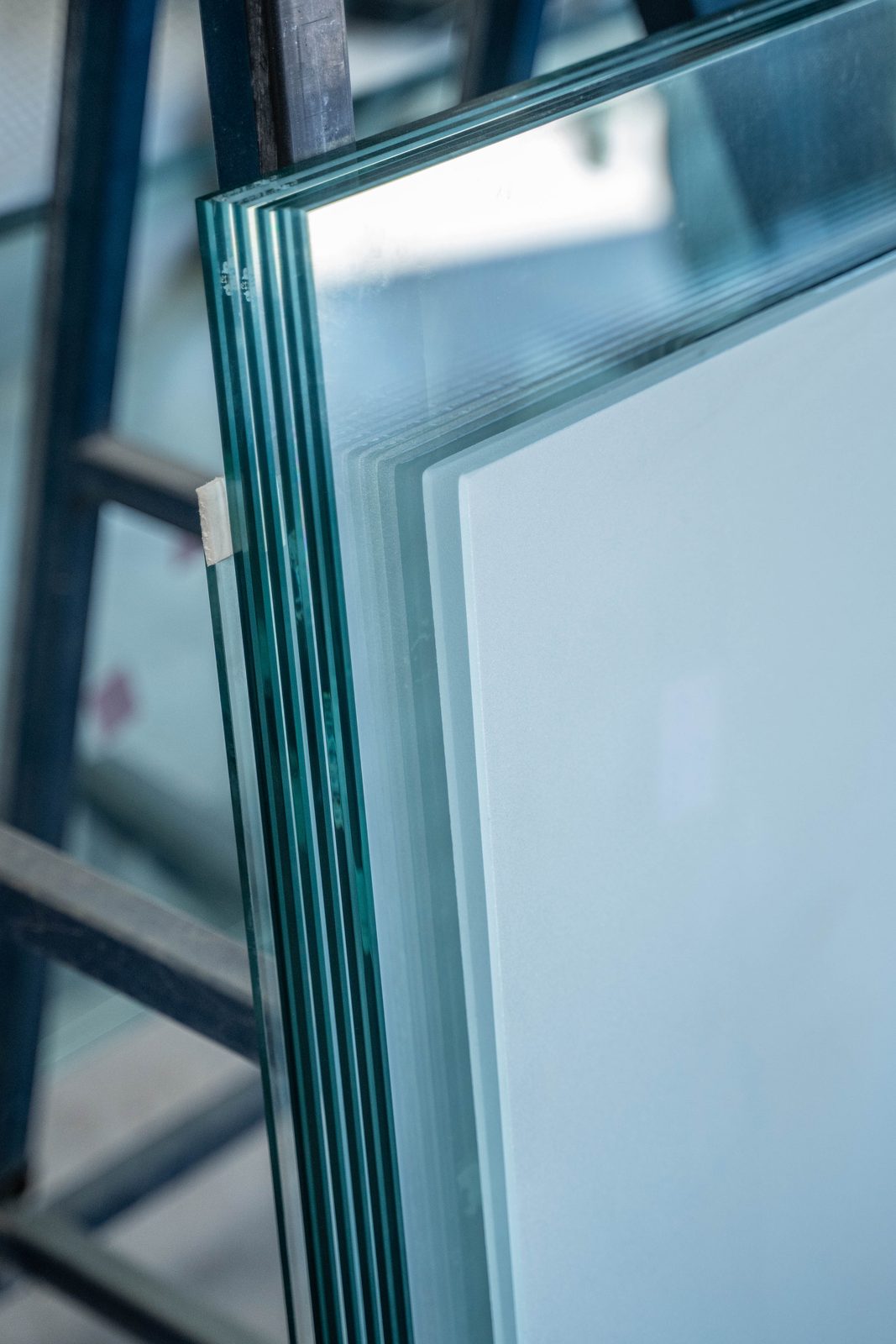
A typical laminated pane has an outer and an inner piece of glass with a plastic interlayer in between. The glass can be standard, heat-strengthened, or toughened, and the interlayer comes in different types depending on whether the priority is safety, security, or sound reduction.
How Laminated Safety Glass Works
The plastic layer is what turns two ordinary panes of glass into safety glass. It handles impact, UV, and sound in a single product.
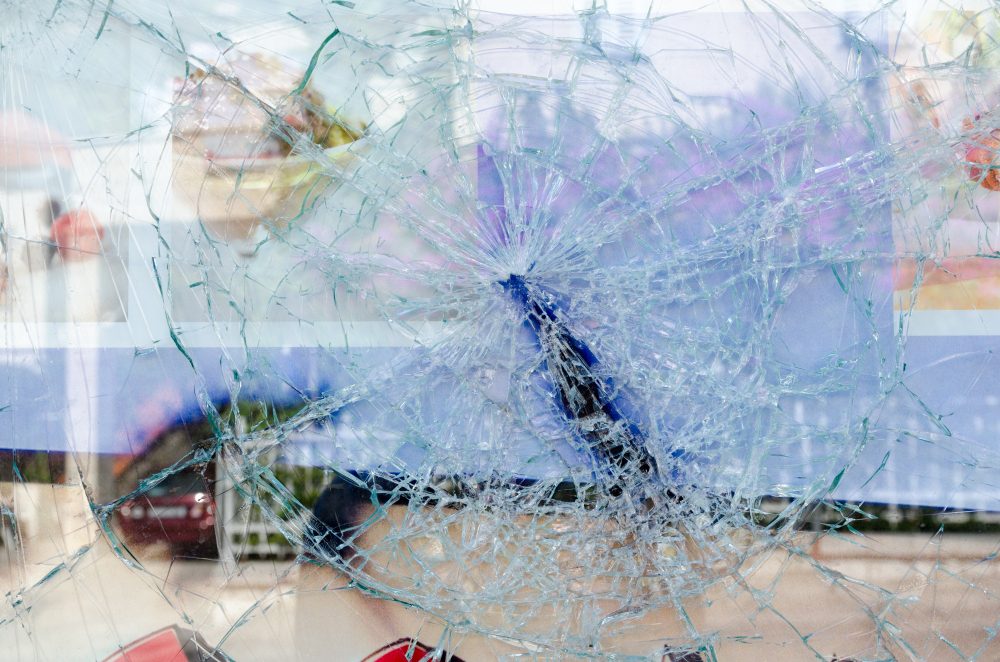
When something hits the pane hard enough to break it, the glass cracks in a spider-web pattern. The plastic layer absorbs the energy, stretches, and holds the broken pieces in place, so the pane keeps working as a barrier even after it has cracked. That is why laminated safety glass protects against everything from stray cricket balls and stones to storm debris and blast loads.
There are five common types of plastic interlayer, each suited to a different job:
Standard PVB
Standard PVB is the everyday choice. It is used in most windows, facades, and skylights. It is the softest and most economical interlayer; its edges need protection from moisture.
Structural PVB
Structural PVB sits between standard PVB and SGP, roughly 3 to 6 times stiffer than standard PVB. It is the usual project choice for balustrades, overhead glazing, and skylights where full SGP is not needed. Made by Kuraray (which also makes SGP), it is commonly called Kuraray Lamination in India.
Acoustic PVB
Acoustic PVB has a softer core that cuts sound transmission significantly. It is specified for noise-sensitive buildings like hospitals, hotels, and schools near busy roads (see our guide on acoustic glass and soundproof glass).
SGP (SentryGlas Plus)
SGP (SentryGlas Plus) is a premium ionoplast interlayer, roughly 100 times stiffer and 5 times stronger than standard PVB. Unlike the PVB family, it holds its stiffness under heat and sustained load, resists moisture at exposed edges, and retains load-bearing capacity even after the glass breaks. It is the go-to for structural glass, balustrades, canopies, and bulletproof glass.
EVA
EVA is used in decorative lamination, solar panel encapsulation, and anywhere moisture resistance matters, such as bathroom enclosures. It is not a structural interlayer.
Stiffness figures are indicative; for structural design, use the manufacturer's data for your temperature and load duration.
Key Benefits of Laminated Glass
Laminated glass combines safety, security, and comfort in a way no other glass product matches.
- Stays together when it breaks: This is the defining benefit. A cracked laminated pane keeps the broken pieces stuck to the plastic layer, so there are no falling shards and no open hole in the window. This is why NBC 2016 requires laminated glass for overhead glazing and fall-risk areas.
- Strong against impact: Toughened laminated glass stands up to ball strikes, blunt force, and break-in attempts.
- Security against intrusion: Thicker, multi-layer builds with SGP interlayers are used to make bulletproof glass for banks, jewellery stores, and high-security buildings.
- UV protection: The plastic interlayer blocks up to 99% of UV rays, protecting people, artwork, furniture, and interior finishes. Important in museums, showrooms, and healthcare facilities.
- Sound insulation: Acoustic PVB absorbs sound much better than standard glass, which makes laminated glass the default choice in noise-sensitive buildings.
- No falling fragments if a toughened pane fails: Even if one toughened layer breaks on its own (a rare but known issue), the plastic interlayer holds it in place. For a full treatment, read our guide on spontaneous glass breakage.
- Design flexibility: Available in clear, tinted, reflective, frosted, patterned, and printed finishes, with coloured interlayer options for feature walls and facades.
Laminated Glass vs Toughened Glass: Which Is Safer?
Both are classified as safety glass under IS 2553 (Part 1): 2018, but they behave very differently.
| Property | Laminated Glass | Toughened Glass |
|---|---|---|
| Strength | Depends on the panes used | 4 to 5 times stronger than annealed |
| Breakage pattern | Cracks but fragments stay bonded to the interlayer | Shatters into small, blunt fragments |
| Post-breakage barrier | Yes, glass remains in the frame | None, the panel disintegrates |
| Falling glass risk | Very low, only if both panes are broken | High, fragments fall as a shower |
| Spontaneous breakage risk | If one ply breaks, the interlayer holds it in place | Susceptible to NiS inclusions |
| Security | High, interlayer resists penetration; SGP and multi-ply deliver bulletproof glass | Low, a single blow shatters the panel |
| UV protection | Blocks up to 99% of UV | Depends on the glass type |
| Sound insulation | Superior, PVB dampens sound | Standard |
| Typical use | Fall-risk, overhead, security, acoustic | Impact strength, doors, partitions |
Laminated Glass Applications by Industry
Laminated glass is specified wherever the consequences of breakage matter more than cost.
Laminated Glass Configurations and Thicknesses
The right specification depends on the application and the required performance.
| Application | Typical Configuration | Why |
|---|---|---|
| Residential windows (Not commonly used) | 5+1.52 PVB+5 (11.52 mm) or thicker depending on size and security concerns | For acoustic performance or where no safety grill is used. Minimum 5 mm glass with a 1.12 mm interlayer. |
| Shop fronts and low-security facades | Depends on opening size. Thicker glass with 1.52 mm SGP where impact loads are a concern | Security and impact resistance |
| Balustrades and pool fencing | Toughened laminated 8+1.52 structural PVB+8 (17.52 mm) | Impact and fall-through safety |
| Overhead glazing and skylights | Toughened heat-soaked laminated 6+1.52 structural PVB or SGP+6 | Falling glass prevention |
| Security and bulletproof glazing | Multi-ply SGP and PVB laminated assemblies (e.g., 6+SGP+6+SGP+6 or thicker) | Penetration and ballistic resistance |
| Acoustic glazing (residential) | 4+1.12 acoustic PVB+4 (9.12 mm) | Speech-range sound reduction. Lower PVB thickness is harder to laminate |
| Acoustic glazing (premium) | 6+1.12 acoustic PVB+8 laminated DGU | Maximum sound reduction |
| Bulletproof glass | Multi-ply SGP and PVB laminated assemblies | Ballistic protection |
Thicker interlayers, stronger glass layers, and SGP interlayers all push laminated glass toward higher-performance applications.
Laminated Safety Glass and NBC 2016: Mandatory Requirements
Three documents govern the use of laminated safety glass in India:
- IS 2553 (Part 1): 2018 is the primary specification for safety glass (toughened and laminated). BIS/ISI certification has been mandatory for all safety glass since 1 April 2023 under the Safety Glass (Quality Control) Order.
- IS 16231 (Parts 1 to 4): 2019 is the code of practice for the use of glass in buildings. Part 4 classifies human impact risk categories based on sill height and fall risk, and prescribes the use of safety glass per IS 2553.
- NBC 2016 (Part 6, Section 8) requires safety glass in human impact zones and mandates laminated glass for overhead glazing because falling toughened fragments pose a serious injury risk. This makes laminated (or toughened laminated) glass effectively mandatory for skylights, atriums, and canopies.
For a broader view of glazing selection across safety, acoustic, and thermal requirements, read our guide on how to choose the right glass for your building project.
Specifying Laminated Glass: A Practical Checklist
Key decisions to document in the glass schedule:
- Glass plies: Annealed, heat-strengthened, or toughened. Most facade and fall-risk applications should use toughened or heat-strengthened plies.
- Interlayer type: Standard PVB for general use, acoustic PVB for noise-sensitive projects, structural PVB for balustrades and overhead glazing, and SGP for fully structural and security glazing.
- Interlayer thickness: PVB comes in 0.38 mm sheets. Multiple sheets are layered to reach the needed thickness. 1.12 mm and 1.52 mm are most common. 0.76 mm can be used for smaller sizes.
- Total thickness: Based on IS 16231 Part 3 wind-load calculations and pane size.
- BIS/ISI certification: Confirm the ISI mark under IS 2553 (Part 1): 2018.
- Structural glazing: Specify SGP interlayers and request load-bearing calculations.
- Overhead glazing: Use toughened laminated glass with heat-soaked outer plies.
Why Choose Karnataka Metal Company for Laminated Glass?
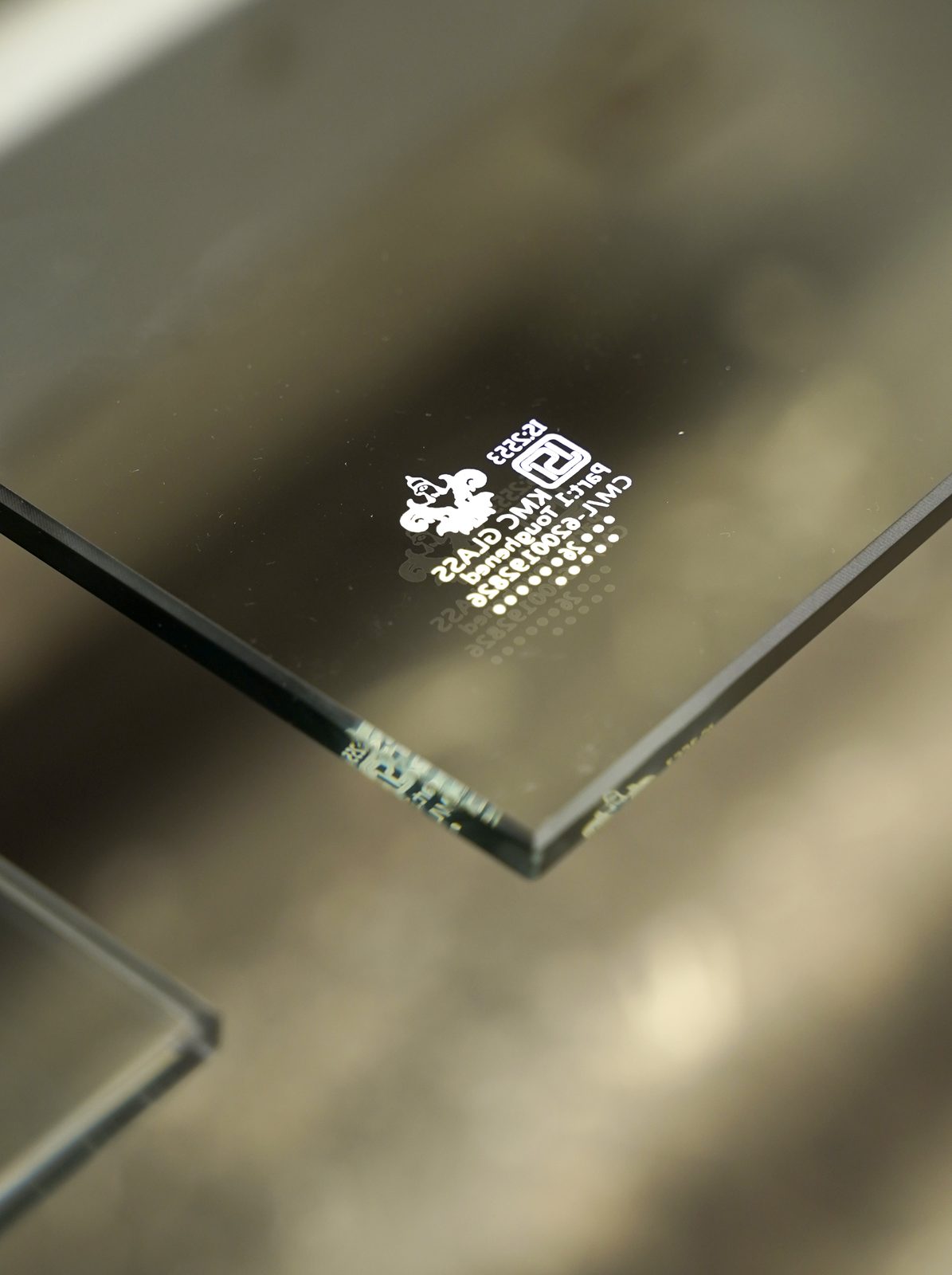
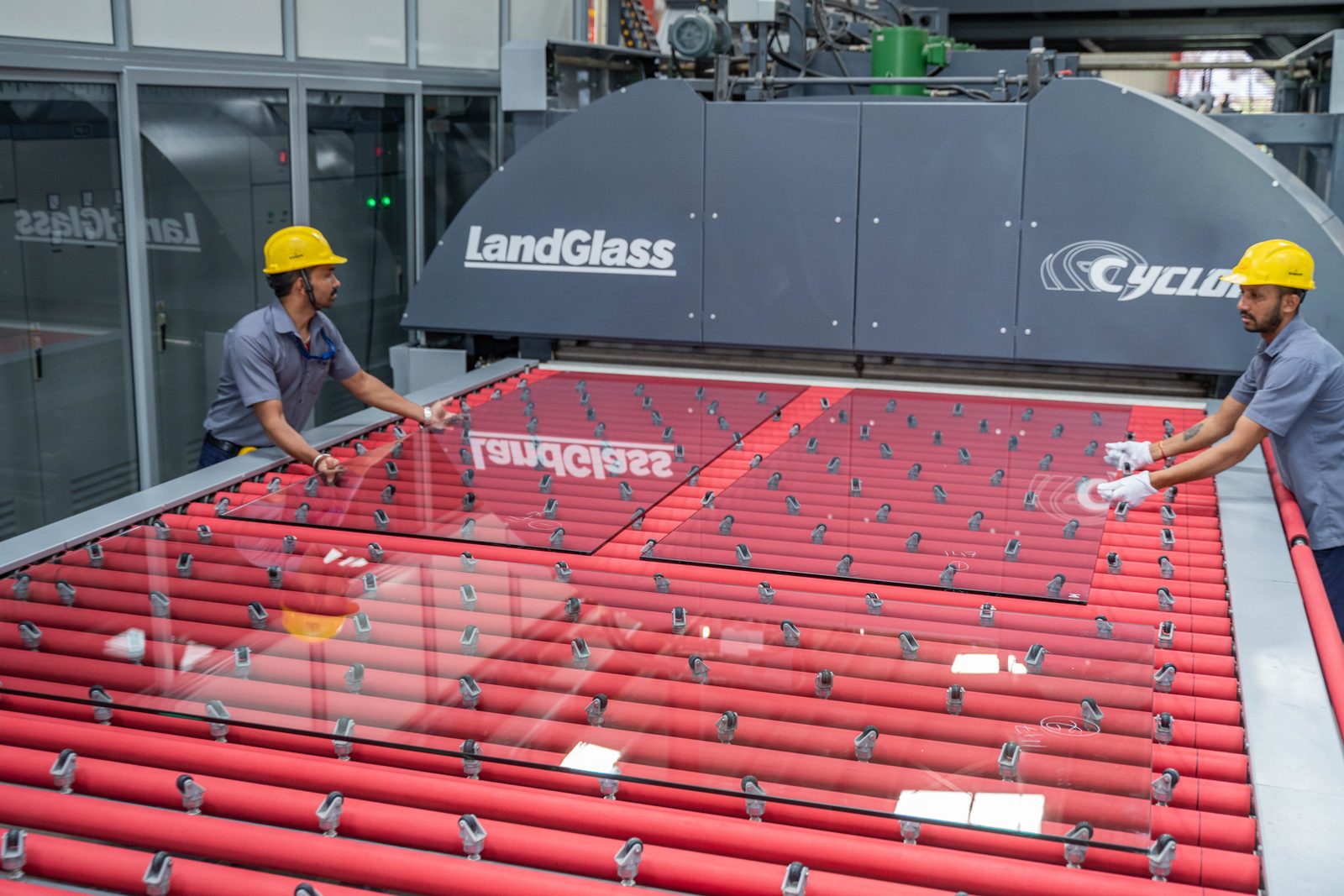
As one of South India's established integrated glass and aluminium companies, Karnataka Metal Company delivers laminated safety glass for fall-risk balconies, school corridors, hospital wards, overhead skylights, and security-critical facades. Laminated glass only performs if it is manufactured carefully: the plastic interlayer has to bond evenly to the glass, the edges have to be sealed cleanly, and the toughened layers have to be heat-treated to reduce the risk of breakage.
Our 50,000 sq ft glass processing facility in Nelamangala, Bangalore runs in-house tempering, heat-strengthening, and double glazed glass assembly.
We offer glass lamination through quality-tested service providers for PVB, structural PVB, acoustic PVB, and SGP bonding. Lamination quality depends on the flatness of the tempered or heat-strengthened glass. Bubbles and delamination are common risks when the glass is not flat enough. Our facility produces some of the flattest glass in the industry, which helps mitigate these risks and deliver high-quality laminated glass.
- ISO 9001:2015 & ISO 14001:2015 and BIS/ISI certified facility, compliant with IS 2553 (Part 1): 2018 for laminated and toughened safety glass
- Full range of glass types: standard, heat-strengthened, toughened, and toughened heat-soaked laminated, plus multi-layer SGP builds for structural and bulletproof applications
- Heat soak furnace that reduces the risk of rare spontaneous breakage in toughened glass used in laminated facades
- Large-size processing: toughened and heat-strengthened up to 2800 × 5000 mm, laminated up to 2400 × 5000 mm, and DGUs up to 64 mm thickness
- In-house testing to IS and EN standards, including human impact and ball drop testing as required by BIS
- Strong inventory and sourcing network for faster turnaround on project-scale safety glass packages and smaller custom orders
As an integrated supplier, we also provide aluminium profiles and machining services from the same Bangalore campus, so the glass and the window frame are coordinated together. That matters on balconies, fall-risk windows, and overhead glazing, where the frame and the glass have to work as one safety system.
Get in Touch
Contact us for laminated glass selection guidance and competitive pricing.
- Phone: +91 80 2670 9928
- Email: sales@karnatakametal.com
- Visit us: 16 & 17, A.M Road, Kalasipalya Extension, Bangalore 560002
Get in touch for a consultation and quote.